The roulette wheel, a mesmerizing dance of chance and anticipation, has captivated players for centuries. The clatter of the ball, the suspenseful pause, and the potential for a life-altering win create an irresistible allure. But beneath the glitz and glamour lies a cold, hard truth: roulette, at its core, is a game of probability. The thrill of the game makes any player wonder about the real odds and, most importantly, if there’s a legitimate way to consistently beat them.
Winning at roulette is not simply a matter of luck but rather understanding the numbers and the advantages that the house has from the start. This article will examine the odds, explore potential strategies, and address some very important factors that come into play that either make or break your bankroll.
While many claim to have unlocked the secret to guaranteed riches, a realistic perspective is crucial. This article serves to manage expectations while providing valuable information. The goal isn’t to promise unrealistic outcomes but to offer a clear, concise analysis of roulette’s complexities, arming you with the knowledge to make informed decisions and play strategically.
Understanding the Basics of Roulette
Roulette is a casino game revolving around a spinning wheel and a small ball. The objective is simple: players bet on where the ball will land after the wheel stops spinning. While seemingly straightforward, understanding the nuances of the roulette wheel, the various bet types, and their associated payouts is key to enjoying the game and potentially increasing the chances of winning. The following information provides a foundational understanding of these elements.
Roulette Wheel Layout
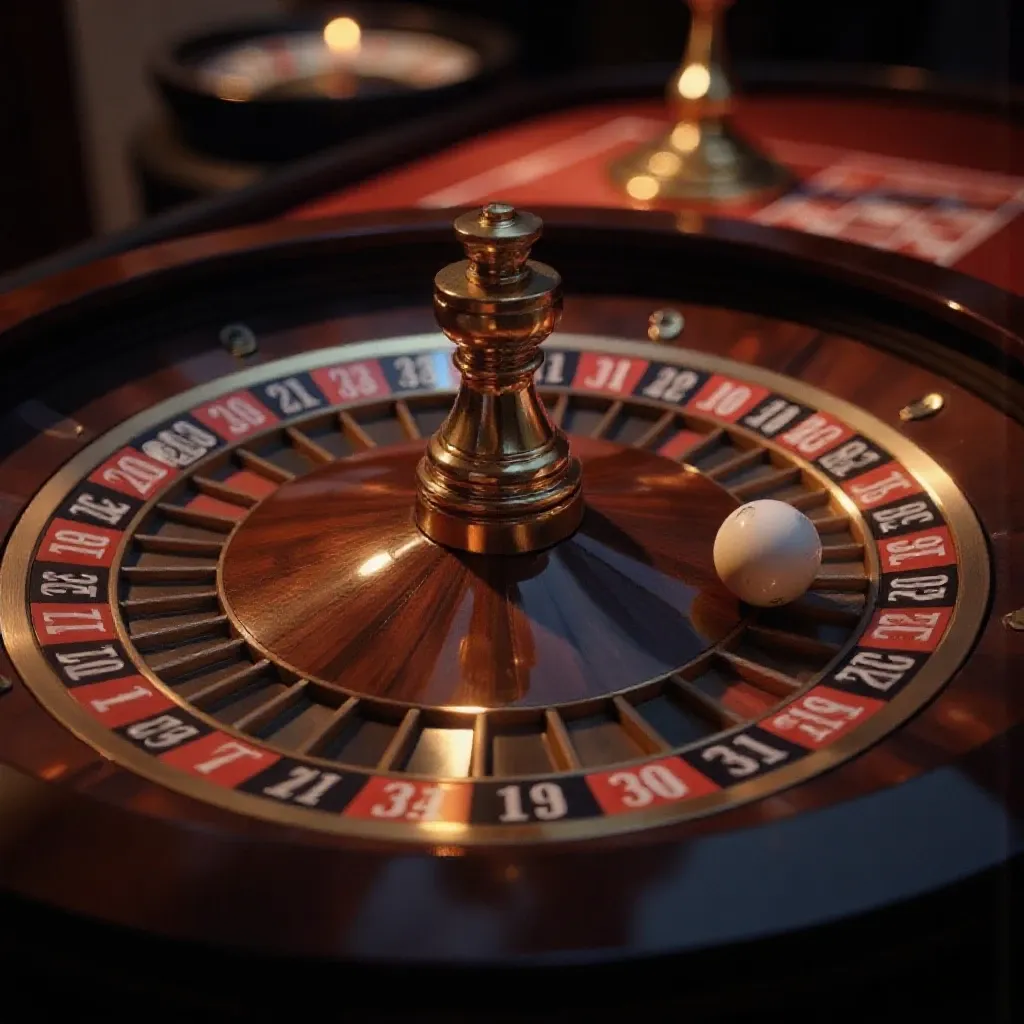
The roulette wheel features numbered slots, ranging from 1 to 36, and one or two zero slots. These numbers are not arranged sequentially but in a seemingly random order around the wheel’s circumference. The color of the slots alternates between red and black, with the zero (or zeros) typically colored green.
Players place bets on a corresponding betting table, which mirrors the numbers and colors of the roulette wheel. This table allows players to wager on individual numbers, groups of numbers, or characteristics of the numbers (e.g., whether the number will be odd or even, red or black).
Types of Bets and Payouts
Roulette bets are broadly classified into two categories: inside bets and outside bets.
- Inside Bets: These are placed on specific numbers or small groups of numbers within the inner section of the betting table. Examples include:
- Straight Up: A bet on a single number.
- Split: A bet on two adjacent numbers.
- Street: A bet on three numbers in a row.
- Corner: A bet on four numbers that form a square.
- Line: A bet on six numbers in two rows.
- Outside Bets: These are placed on larger groups of numbers or characteristics in the outer section of the betting table. Examples include:
- Color Bet: A bet on all red or black numbers.
- Even/Odd Bet: A bet on all even or odd numbers.
- High/Low Bet: A bet on numbers 1-18 (low) or 19-36 (high).
- Column Bet: A bet on all numbers in one of the three vertical columns.
- Dozen Bet: A bet on the first 12, second 12, or third 12 numbers.
Payouts vary depending on the probability of the bet winning. Bets with lower probabilities (e.g., Straight Up) offer higher payouts, while bets with higher probabilities (e.g., Color Bet) offer lower payouts. The following table summarizes common roulette bet types and their corresponding payout odds:
| Bet Type | Payout |
|---|---|
| Straight Up | 35:1 |
| Split | 17:1 |
| Street | 11:1 |
| Corner | 8:1 |
| Line | 5:1 |
| Color/Even/Odd/High/Low | 1:1 |
| Column/Dozen | 2:1 |
European vs. American Roulette
There are two main variations of roulette: European and American. The crucial difference lies in the wheel’s layout.
European vs. American Roulette
European roulette features a single zero (0), while American roulette includes both a single zero (0) and a double zero (00). This seemingly small difference significantly impacts the house edge, which is the casino’s statistical advantage in the game. The presence of the double zero in American roulette increases the house edge, making it less favorable for players compared to European roulette. Specifically, the house edge in European roulette is approximately 2.7%, while in American roulette, it’s around 5.26%. Therefore, players who want to improve their chances of winning should favor the European version. This difference changes everything, because the overall odds are better.
The House Edge: Roulette’s Built-In Advantage
Roulette, with its spinning wheel and colorful betting layout, offers an illusion of even chances, but beneath the surface lies a mathematical certainty known as the house edge. This is the casino’s built-in advantage, ensuring its long-term profitability. It doesn’t mean you can’t win in the short term – luck always plays a part – but over many spins, the house edge guarantees the casino comes out ahead. The house edge is essentially the difference between the true odds of winning and the payout odds offered by the casino. It’s the price you pay for the entertainment and the chance at a big win. The probability of hitting a single number on a European roulette wheel is 1 in 37, but the payout is only 35 to 1. This difference creates the house edge.
Understanding the house edge is crucial for any roulette player. It allows you to make informed decisions about your bets and manage your expectations. While you can’t eliminate the house edge, knowing how it works can help you choose bets that minimize its impact and potentially extend your playtime. Remember, the house edge applies to all bet types, from single-number bets to even-money bets like red or black.
The Math Behind the Edge
The house edge in roulette varies depending on the wheel type. European roulette, with its single zero, has a house edge of approximately 2.7%. This means that, on average, the casino expects to keep 2.7 cents of every dollar wagered. American roulette, with both a single zero and a double zero, has a higher house edge of around 5.26%. The double zero significantly increases the casino’s advantage. When you pick more numbers you improve your chances to win, but don’t improve the payout at all. This is why playing on the European roulette is more profitable in the long run.
Popular Roulette Strategies (and Why They Often Fail)
Roulette, with its spinning wheel and promise of quick riches, has captivated players for centuries. The allure of predicting where the ball will land has led to the development of numerous roulette strategies, each claiming to offer a winning edge. While these betting systems might seem logical on the surface, a closer examination reveals their inherent flaws.
One of the most well-known strategies is the Martingale. This system involves doubling your bet after every loss, with the idea that eventually you will win and recoup all previous losses plus a small profit. The appeal is obvious: a guaranteed win! However, the Martingale requires a limitless bankroll. A string of consecutive losses can quickly lead to enormous bets that exceed table limits, or deplete your funds entirely. Imagine betting $1, then $2, then $4, then $8 – it escalates rapidly. One cold streak, and you’re bust.
The D’Alembert system is a more conservative approach. Instead of doubling your bet after a loss, you only increase it by a small amount. Conversely, after a win, you decrease your bet. The idea is to capitalize on winning streaks and minimize losses. The fundamental flaw is that even with proper execution, profits with this system are achingly slow and do not change the inherent odds. While you might bleed out your bankroll slower than you would with Martingale, you’d still lose over time.
Another popular strategy is the Fibonacci system. This system uses the Fibonacci sequence (1, 1, 2, 3, 5, 8, 13, etc.) to determine bet sizes. After a loss, you move to the next number in the sequence; after a win, you move back two numbers. This is far more complex than the previous two, and it assumes that a previous win can recoup all your losses. While its slower progression appears “safer”, the house edge remains, untouched.
These are just the tip of the iceberg. Other systems include the Labouchere, Paroli, and various combination strategies. They all share a common weakness: they attempt to manipulate the odds of a truly random game. Ultimately they are all flawed.
Understanding the Gambler’s Fallacy
A significant reason why roulette strategies gain traction is the psychological pitfall known as the gambler’s fallacy. This fallacy is the mistaken belief that if something happens more frequently than normal during a given period, it will happen less frequently in the future (or vice versa), even when the events are independent.
In roulette, each spin of the wheel is an independent event. The ball has no memory of where it landed previously. Just because black has come up five times in a row does not mean that red is “due” to appear. The odds remain the same on every spin. It is a game of chance. Probability remains constant no matter the previous results.
The gambler’s fallacy can lead players to make irrational betting decisions. For example, they might increase their bets on red after a series of blacks, believing that red is more likely to come up. Such flawed logic can lead to increased losses.
The Illusion of Predictability: Why Roulette is Random
Roulette’s allure lies in its simplicity: a spinning wheel, a bouncing ball, and the tantalizing prospect of instant fortune. However, the core principle of roulette is unwavering randomness. The game is meticulously designed to ensure that each spin is an independent event, uninfluenced by previous outcomes. This inherent unpredictability is what makes roulette a true game of chance. Many believe they can predict where the ball will land, but that’s usually wishful thinking.
Several factors contribute to this randomness. The ball’s release point, the speed of the wheel, and even minute imperfections in the wheel’s construction introduce chaotic elements that defy precise calculation. While the idea of wheel bias – exploiting physical flaws to predict outcomes – has been around for a long time, modern casinos employ rigorous maintenance and sophisticated monitoring systems to minimize any such advantage. Fleeting patterns might appear in the short run, but statistically, these are meaningless blips that have no bearing on future spins. Ultimately, roulette embraces chaos, ensuring a level playing field where luck reigns supreme.
Are there other ways to ‘weight’ the game in your favor?
While predicting the spin may be more fiction than fact there are other “weighty” benefits to playing frequently. Casinos reward patronage through comps and loyalty programs. The more you play, the more likely you are to receive perks like complimentary meals, discounted or free rooms, and invitations to exclusive events. These rewards are designed to enhance the overall casino experience and encourage continued play.
Responsible Gambling: Managing Expectations and Risks
Roulette, with its spinning wheel and promise of potential winnings, can be an exciting form of entertainment. However, it’s crucial to approach it responsibly, understanding that it involves inherent financial risks. Responsible gambling begins with setting clear betting limits. Decide on a budget before you start playing and, more importantly, stick to it. Think of this budget as the cost of entertainment, similar to going to a movie or a concert.
Effective risk management is also fundamental. Avoid the temptation to chase losses, as this can quickly lead to escalating bets and financial strain. Recognize that losses are a part of the game, and accept them gracefully. Furthermore, be aware of the signs of problem gambling, such as spending more time and money than intended, neglecting responsibilities, or feeling anxious or irritable when not gambling. If you or someone you know exhibits these signs, seek help. Many resources are available to provide support and guidance. Ultimately, the key to responsible gambling is to view roulette as a form of entertainment and never bet more than what you can afford to lose.
Expert Insights: My Experience with Roulette
Roulette, with its spinning wheel and promise of fortune, has always held a certain allure. My own experiences with the game, however, have shaped a perspective grounded in realism and responsible play. I recall one early encounter at a bustling casino where I placed a few bets on lucky numbers. The initial thrill of a small win was quickly overshadowed by the realization that luck is a fickle mistress. That night, I walked away slightly down, but with a valuable lesson learned.
Another time, I found myself observing a seasoned player meticulously tracking numbers, convinced they had cracked the code. Hours passed, their initial confidence slowly eroding as the wheel continued its relentless spin, defying any perceived pattern. It was a stark reminder that roulette is, at its core, a game of chance, and attempts to outsmart it are often futile.
What I’ve learned is that the key to enjoying roulette lies in understanding its inherent probabilities. The house always has an edge, and accepting this reality is crucial. Setting a budget and sticking to it, regardless of wins or losses, is paramount. I’ve witnessed firsthand the dangers of chasing losses, a common pitfall that can quickly turn a fun pastime into a financial burden.
Roulette, in my view, should be approached as entertainment, a thrilling dance with chance where the outcome is ultimately beyond our control. By embracing a mindful mindset and understanding the game’s true nature, it’s possible to appreciate its excitement without falling prey to its potential pitfalls. Responsible play is not just a suggestion; it’s the only way to truly enjoy the spin.
Conclusion: Accepting the Odds and Enjoying the Game
Roulette, with its spinning wheel and promise of fortune, offers a thrilling experience. However, understanding the game’s inherent odds is crucial. This exploration has highlighted the challenges in overcoming the house edge, despite various strategies and systems. None can guarantee consistent winnings in the long run.
Therefore, the most sensible approach is to embrace roulette for what it is: a game of chance. Forget about miracle methods. The allure lies in the anticipation, the suspense of the spinning wheel, and the camaraderie with fellow players. Responsible gambling means acknowledging the risks and setting realistic expectations.
Ultimately, the goal is enjoyment. Roulette should be a source of entertainment, a way to unwind and experience the excitement of the casino environment. By accepting the odds, focusing on the fun, and practicing responsible gaming habits, one can fully appreciate the captivating nature of roulette without falling prey to unrealistic expectations. So, spin the wheel, embrace the uncertainty, and savor the ride!